
Message from the principal, Principal Sean Galiher
Welcome
On behalf of the entire Penn High School faculty, welcome to the Penn High School website. Our hope is that you find our website user friendly and that you will use it as intended. Our website is our communications tool with our parents and community. Please check our website often as the information is updated daily. Checking daily announcements, teacher web pages, and guidance information regularly is critical in supporting your student.
Rigor, Relevance, and Relationships
Penn High School strives to provide an educational environment for students to reach their highest academic potential, while preparing each student to be a responsible, healthy, and contributing citizen. We pride ourselves on offering a very personalized environment in which we prepare students for a range of post-secondary options including the workplace, the military, and college.
Indiana’s Department of Education maintains the “INView” website where school information including demographics, test scores, and graduation rates are displayed for Penn High for the past several years. We invite you to visit the INView website to browse this information. Penn’s data reveal consistently high outcomes by almost any measure.
The Academies
The Academies at Penn High School are the framework for helping our freshmen become acclimated to high school and then supporting all students with the transition from high school to postsecondary options and adulthood.
- The Freshman Academy (serves all ninth graders by providing a cohesive and highly supportive first-year experience)
- Fine Arts & Communications Academy
- Management & Business Academy
- Health and Human Services Academy
- STEM (Science, Technology, Engineering, Math) Academy
- World Languages Academy
- The Early College Academy (fosters early success for students focused on obtaining an Associate Degree while completing their high school coursework)
Through their work in each academy, students will find relevant and meaningful coursework taught in a supportive environment where each student is known well by his teacher and peers. The Academies support college and career readiness through this personalized structure. Through these “smaller learning communities,” students build relationships while engaged in relevant learning experiences.
Professional Staff
The teaching staff at Penn High School is among the best in the country. Every teacher at Penn has been trained in:
- Personalized instruction
- Differentiated instruction
- Common assessments
- Response to Intervention
- Literacy
Our success as a school is measured by the success of each of our students. Every staff member at Penn, not just the teachers, are committed to the success of every student. We all stand ready to help and support you with any issue.
Coaches – Spring Sports
Girls Tennis Coach |
|
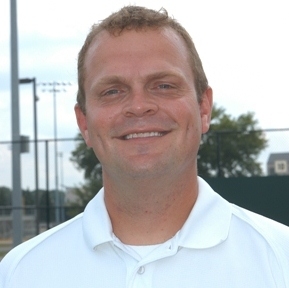 |
Eric Bowers Year Hired as Head Coach 2008 Academic Position Economics Teacher at Penn College Bethel College Contact Coach Bowers Phone: 574-254-2802, ext. 20701 Email: ebowers@phm.k12.in.us |
Boys Track Coach |
|
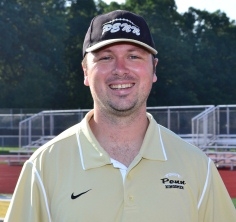 |
Jon Carroll Year Hired as Head Coach 2014 Academic Position Business, Business Law, Sports Marketing Teacher at Penn College Indiana University Contact Coach Carroll Phone: 574-254-2802, ext. 20405 Email: jcarroll@phm.k12.in.us |
Boys Baseball Coach |
|
 |
Greg Dikos Year Hired as Head Coach 1987 Academic Position Health Teacher at Penn High School College Ball State University Contact Coach Dikos Phone: 574-254-2802, ext. 20717 Email: gdikos@phm.k12.in.us |
Girls Track Coach |
|
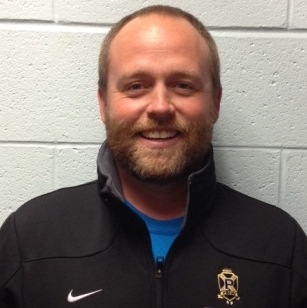 |
Josh Fletcher Year Hired as Head Coach 2014 Academic Position Independent Study Teacher at Penn High School College Goshen College (B.S.), Indiana University (M.S.) Contact Coach Fletcher Phone: 574-254-2802, ext. Email: jfletcher@phm.k12.in.us |
Boys Golf Coach |
|
 |
Tony Polizzotto Year Hired as Head Coach 2012 Employment Sales College Ball State University Contact Coach Polizotto Email: tonypolizzotto@att.net |
Girls Softball Coach |
|
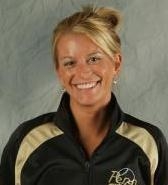 |
Beth Zachary Year Hired as Head Coach 2008 Academic Position Assistant Principal at Penn High School College Indiana University-Purdue University Ft. Wayne Contact Coach Zachary Phone: 574-254-2802, ext. 20474 Email: bzachary@phm.k12.in.us |
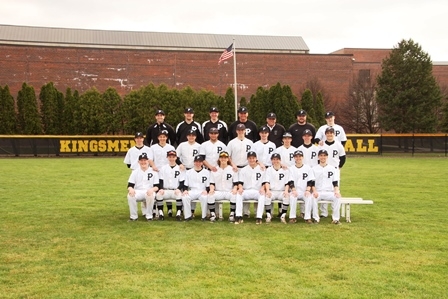
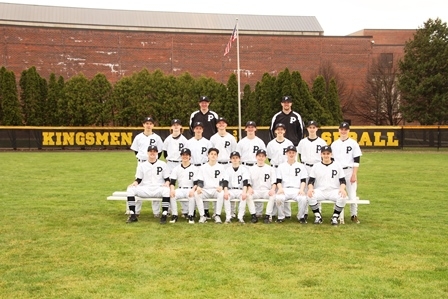
Spring Sports
 |
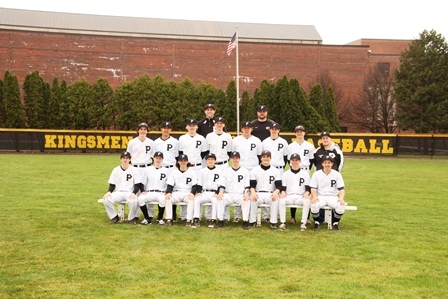 |
| 2015-2016 Varsity Baseball | 2015-2016 JV Baseball |
 |
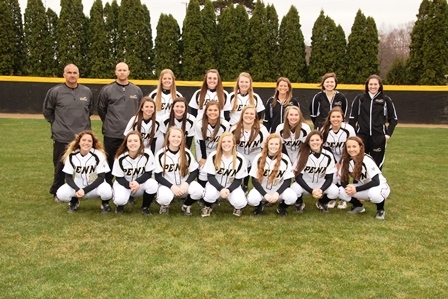 |
| 2015-2016 Freshman Baseball | 2015-2016 Varsity Softball |
 |
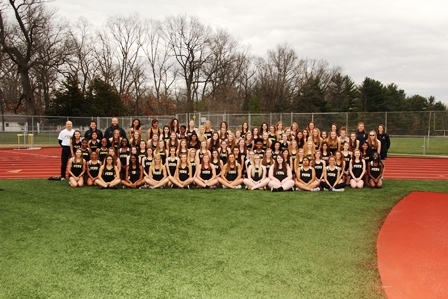 |
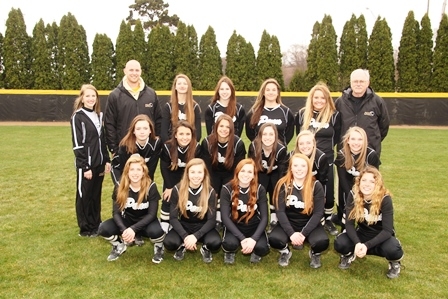
| 2015-2016 JV Softball | 2015-2016 Girls Track |
 |
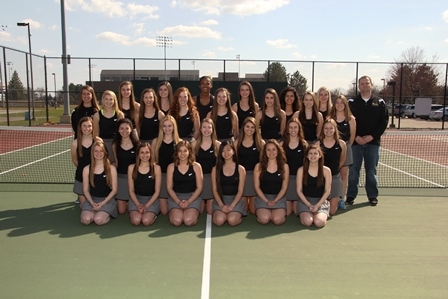 |
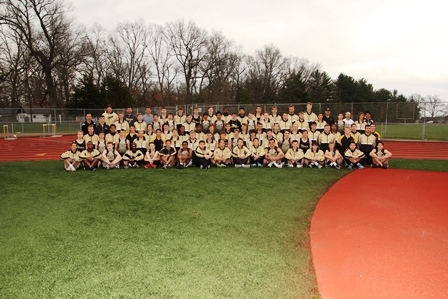
| 2015-2016 Boys Track | 2015-2016 Girls Tennis |
 |
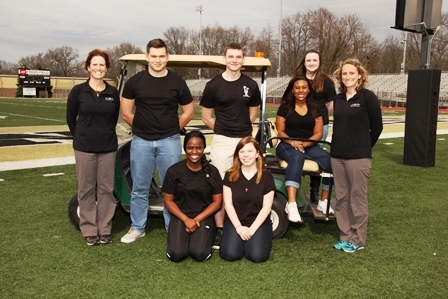 |
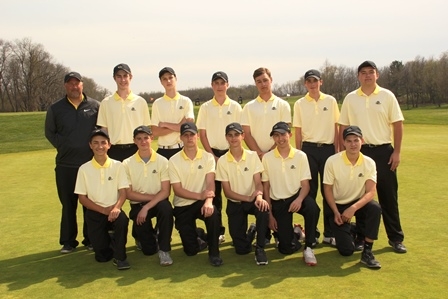
| 2015-2016 Boys Golf | 2015-2016 Athletic Trainers |
Maps and Directions
ITC Resources & Guidelines
The Instructional Technology Center (ITC) is located inside the Media Center. It will be staffed from 7:30 a.m. to 4:00 p.m. each school day.
EQUIPMENT AVAILABLE FOR CHECKOUT:
tape recorders/players, carts with laptops, slide projectors, VCRs, opaque projectors, screens, camcorders, and digital cameras.
VIDEO EQUIPMENT & PRODUCTION
Camcorders and video editors are available for teacher and student use. The ITC encourages student production as an excellent means of communication and assessment. Prior scheduling of this very popular area is, however, a must. Mrs. Coney is available help you design your project and to work with your students in order to obtain the most desirable outcomes.
COPYRIGHT GUIDELINES
The purpose of the following guidelines is to state the minimum and not the maximum standards of educational fair use under Section 107 of H.R. 2223. Conditions determining the extent of permissible copying for educational purposes may change in the future; that certain types of copying permitted under these guidelines may not be permissible in the future; and conversely that in the future other types of copying not permitted under these guidelines may be permissible under revised guidelines. The following statement of guidelines is not intended to limit the types of copying permitted under the standards of fair use under judicial decision and which are stated in Section 107 of the Copyright Revision Bill. There may be instances in which copying which does not fall within the guidelines stated below may nonetheless be permitted under the criteria of fair use.
GUIDELINES
A. Single copying for teachers
A single copy may be made of any of the following by or for teachers at their individual request for their scholarly research or use in teaching or preparation to teach a class:
1. a chapter from a book;
2. an article from a periodical or newspaper;
3. a short story, short essay or short poem, whether or not from a collective work; a chart, graph, diagram, drawing, cartoon or picture from a book, periodical, or newspaper.
B. Multiple Copies for Classroom Use
Multiple copies (not to exceed in any event more than one copy per pupil in a course) may be made by or for the teacher giving the course for classroom use or discussion provided:
1. the copying meets the test of brevity and spontaneity as defined below; and,
2. meets the cumulative effect test as defined below; and,
3. each copy includes a notice of copyright.
C. Prohibitions as to A and B
Notwithstanding any of the preceding information, the following shall be prohibited:
1. Copying shall not be used to create or to replace or substitute for anthologies, compilations or collective works. Such replacement or substitution may occur whether copies of various works or excerpts therefrom are accumulated or reproduced and used separately.
2. There shall be no copying of or from works intended to be “consumable” in the course of study or of teaching. These include workbooks, exercises, standardized tests and test booklets and answer sheets and like consumable material.
3. Copying shall not:
(a) substitute for the purchase of books, publishers’ reprints or periodicals;
(b) be directed by higher authority;
(c) be repeated with respect to the same item by the same teacher from term to
term;
(d) no charge shall be made to the student beyond the actual cost of the
photocopying.
DEFINITIONS
Brevity
(i) Poetry: (a) A complete poem if less than 250 words and if printed on not more than two pages or (b) from a longer poem, an excerpt of not more than 250 words.
(ii) Prose: (a) Either a complete article, story or essay of less than 2,500 words, or (b) an excerpt from any prose work of not more than 1,000 words or 10% of the work, whichever is less but in any event a minimum of 500 words. (Each of the numerical limits stated in “i” and “ii” above may be expanded to permit the completion of an unfinished line of a poem or of an unfinished prose paragraph.)
(iii)Illustration: One chart, graph, diagram, drawing, cartoon or picture per book or per periodical issue.
(iv)”Special” works: Certain works in poetry, prose or illustrations and which are intended sometimes for children and at other times for a more general audience fall short of 2,500 words in their entirety. Paragraph “ii” above notwithstanding such “special works” may not be reproduced in their entirety; however, an excerpt comprising not more than two of the published pages of such special work and containing not more than 10% of the words found in the text thereof, may be reproduced.
Spontaneity
(i) The copying is at the instance and inspiration of the individual teacher, and
(ii) The inspiration and decision to use the work the moment of its use for maximum teaching effectiveness are so close in time that it would be unreasonable to expect a timely reply to a request for permission.
Cumulative Effect
(i) The copying of the material is for only one course in the school in which copies are made.
(ii) Not more than one short poem, article, story, essay or two excerpts may be copied from the same author, nor more than three from the same collective work or periodical volume during one class term.
(iii)There shall not be more than nine instances of such multiple copying for one course during one class term. (The limitations stated in “ii” and “iii” above
shall not apply to current news periodicals and newspapers and current news sections of other periodicals.)
Guidelines for the use of videotaped materials in the not-for-profit educational setting.
Section 110 (1) and 110 (4) are understood to permit displaying or performing audiovisual works in nonprofit education institutions under the following conditions:
1. They must be shown as part of the instructional program.
2. They must be shown by students, instructors, or guest lecturers.
3. They must be shown either in a classroom or other school location devoted to instruction such as a studio, workshop, library, gymnasium, or auditorium if it is used for instruction.
4. They must be shown either in a face-to-face setting or where students and teacher(s) are in the same building or general area.
5. They must be shown only to students and educators.
6. They must be shown using a legitimate (that is, not illegally reproduced) copy with the copyright notice included.
INSTRUCTIONAL TECHNOLOGY CENTER
Displays and performances of audiovisual works are prohibited in nonprofit education institutions when:
A. They are used for entertainment, recreation, or even for their cultural or intellectual value but are unrelated to teaching activity.
B. They are transmitted by radio or television (either closed or open circuit) from an outside location.
C. They are shown in an auditorium or stadium before an audience not confined to students, such as a sporting event, graduation ceremony, or community lecture or art series.
D. They involve an illegally acquired or duplicated copy of the work.
E. Teachers may bring video tapes, rented from a video store or the public library, provided they present a copy of their lesson plan showing that the tape is being used under the rules of fair use. Mrs. Youngman can provide information on fair use as it applies to multimedia production (both video and computer generated).
Guidelines for taping commercial broadcasts. Limitations include:
A. Videotaped recordings may be kept for no more than 45 calendar days after the recording date, at which time the tapes must be erased.
B. Videotaped recordings may be shown to students only within the first 10 school days of the 45-day retention period.
C. Off-air recordings must be made only at the request of an individual teacher for instructional purposes, not by school staff in anticipation of later requests by teachers.
D. The recordings are to be shown to students no more than two times during the 10-day period, and the second time only for necessary instructional reinforcement.
E. The taped recordings may be viewed after the 10-day period only by teachers for evaluation purposes, that is, to determine whether to include the broadcast program in the curriculum in the future.
F. If several teachers request videotaping of the same program, duplicated copies are permitted to supply their request; all copies are subject to the same restrictions as the original recording.
G. The off-air recordings may not be physically or electronically altered or combined with others to form anthologies, but they need not necessarily be used or shown in their entirety.
H. All copies of off-air recordings must include the copyright notice on the broadcast program as recorded.
I. These guidelines apply only to nonprofit education institutions, which are further “expected to establish appropriate control procedures to maintain the integrity of these guidelines.”
Extracurr-Anime Club
Description: This club is made up of students who are interested in learning about and drawing anime. Anime is a style of animation originating in Japan, which often features colorful graphics, vibrant characters and action-filled plots with fantastic or futuristic themes. This is an opportunity for students who share this interest to get together and share ideas, draw together, and learn from each other.
STEM Club
PTO Executive Board and Committees
The following is a brief description of the major responsibilities of the Executive Board and Committee Chairmen positions. If you are willing to volunteer in a leadership role, have questions or you would like more information, please contact Penn PTO President Jennifer Reinoehl at PennPTO@phm.k12.in.us or 968-9609 to leave a voicemail.
President – The main responsibilities for the President are to provide general supervision and direction to the organization and preside over meetings.
Vice President – The Vice Presidents aids the President, performs duties of the President when necessary, maintains the membership register and is responsible for absentee voting.
Secretary – The Secretary is responsible for the minutes of all meetings, custodian of the bylaws and records votes at meetings.
Treasurer – The Treasurer must maintain a full and accurate account of receipts and expenditures, make disbursements in accordance with the budget, responsible for deposits, present financial statements at meetings, and work with CPA to ensure proper tax filings.
Treasurer's Assistant – The assistants help treasurer, as needed.
Bylaws – The chairperson prints, updates and revises the bylaws.
Curriculum and Instruction – A PTO representative attends meetings with Penn staff and administrators.
Forum – Four Penn Forum representatives attend monthly meetings with other representatives of PHM schools to share information regarding our school district. The PHM Forum meets at 12 noon on the first Wednesday of the month at the ESC. Meetings are open only to parents or guardians of PHM students.
Navigating the College Search – PTO sponsors a college information night in the spring featuring a guest speaker and panelists who are Penn graduates currently in college and parents of the college students. This committee plans and organizes this helpful event.
School Board Representative – The representative attends PHM School Board meetings and reports to the PTO.
Staff Appreciation and Hospitality – The PTO hosts appreciation luncheon and sends snacks/tokens of appreciation to staff several times a year. The PTO also provides snacks and refreshments to volunteers at major PTO events, such as Winter Dance. Many volunteers are needed.
Sunshine – On behalf of the PTO, this committee sends all-occasion correspondence/cards when appropriate to Penn staff, students and PTO members.
Volunteer Liaison – The liaison assists the PHM Volunteer Coordinator by keeping track of the number of volunteer hours contributed to PTO activities. The PTO liaison also recruits volunteers to work concession stands, Winter Dance and other PTO activities.
Web Site – The committee posts information regarding PTO and PTO activities on the Penn web site
Winter Dance – Winter Dance is the annual semi-formal dance involving all grade levels and is sponsored by the PTO. This major event is held in January at the school and requires 2 or 3 chairpersons and over 100 volunteers to help with various subcommittees (decorations, coatroom, publicity, ticket sales, chaperones, etc.).
POPS Scholarship
The intent of the Penn POPS Scholarship Fund is to grant two (2) $500.00 non-renewable scholarships to two graduating seniors from the Orchestra program for the purpose of furthering their advanced education.
Applications are available in the Guidance Department at Penn High School and are due by April 19, 2013.
Elegibility Criteria for Selection are as Follows:
1. The graduating student must have a minimum of three (3) years consecutive
enrollment in the orchestra program concluding with their senior year.
2. The student must pursue any 2 or 4-year college major.
3. An essay describing involvement in school activities, personal goals, why the
student is applying and community involvement. Provide information regarding
student’s participation in the Music Department, involvement in school musical
groups, and community involvement in the Arts (what you’ve done).
4. A letter of intent including goals for the future and how you plan to contribute
back to society (what you’d like to do).
5.Applicant must have a recommendation from an orchestra director and a
community recommendation on file in the Guidance Office or attached to this
application.
6. Completed application form.
For all questions, please contact the Penn High School Guidance office.