

Advanced Choir (Concert Choir) Syllabus
2 Semesters 2 Credits Grade: 11-12
Course Description: This advanced mixed choir studies and performs choral literature selected from a variety of periods in music history. This course is designed to introduce and develop advanced singing techniques and sight-reading skills. This group performs in concert eight times a year. Attendance required at all performances.
Course Objective: To provide students with positive musical and educational experiences through the process of singing fundamentals-rehearsals-performances.
Content
I. Advanced rhythms using all types of note & rests.
II. Major & minor key signatures.
III. Advanced sight-reading exercises. (May include 4-part)
IV. Major, minor & chromatic scales.
V. Correct vocal techniques & singing posture.
VI. Latin pronunciation.
VII. Pronunciation of French and or German.
Approximate Time Table
1st. nine-week grading period.
1. Introduction to 4-part sight-reading.
2. Reinforcement of proper rehearsal procedures.
3. Reinforcement of proper vocal techniques & singing
posture.
4. Book III & IV sight-reading exercises.
2nd nine-week grading period.
1. Reinforcement & sequential progression of 4-part sight-
reading.
2. Book IV sight-singing exercises.
3. Reinforcement & sequential progression of correct vocal
techniques.
4. Learn music for upcoming concert.
6. Rehearsals/Concerts (December).
7. Rehearse solo/ens. music
3rd nine-week grading period.
1. Book IV & V sight-reading exercises.
2. Reinforcement & sequential progression of 4-part
sight-reading.
3. Reinforcement & sequential progression of proper vocal
techniques.
4. ISSMA Chamber Night.
5. ISSMA Contest .
6. Rehearse music for Fine Arts Festival
7. Fine Arts Festival
4th nine-week grading period.
1. Book V sight-reading exercises.
2. Reinforcement & sequential progression of 4-part sight-
reading.
3. Reinforcement & sequential progression of proper vocal
techniques.
4. Rehearse music for Contest & Spring Concert.
5. ISSMA District Contest (April).
6. ISSMA State Contest (April).
7. Spring Rehearsals/Concerts (May).
8. Commencement (June).
Materials Used
1. The Folk Song Sight-Singing Series Books III, IV & V.
2. 4-part sight-singing exercises compiled by the directors.
3. Choral music selected by the directors.
Grading System
Nine-week grades for Choir classes will be determined by the student's percentage grades in the following categories:
Tests: Singing and Written
-The average score earned on tests given during the grading period.
-On singing tests students will, when possible, be given a copy of their part showing where flaws occurred.
-Tests missed and not made up will result in a "0".
Performances: Concerts, Contests and other public appearances
-The average score earned by the student for participation in performances during the grading period.
-Unexcused performances missed will result in a "0".
Classroom Participation
-The average score earned by the student during the grading period as determined by the classroom teacher.
-Consideration will include classroom rules established by the teacher.
-Consideration will include tardies and absences.
Performance Rehearsals
-The average score earned by the student for participation in performance rehearsals during the grading period.
-Unexcused performance rehearsals missed will result in a "0".
Classroom Rules
You have the responsibility of being in your seat prior to the bell. Sight reading pitch will be sounded immediately following class bell. Tardies will be assessed a one point deduction from the participation grade. Failure to check in will result in a two point deduction.
1. No gum.(Deduction of 1 participation point)
2. No talking.
3. Good posture.
4. Positive behavior.
5. Good attention
Attendance Policy
Consistent attendance is important for successful music learning and vocal skill development. It is the responsibility of the student to request makeup assignments (available in Choir Room).
All students are expected to make up work for missed classes regardless of reason. Classes not made up will result in a two (2) point Classroom Participation grade reduction. Absences may be made up by turning in a "make-up" sheet within two (2) days of absence(s). For extended absences, this time will be extended to the number of days absent plus one day. Ultimately, the evaluation of student success will be based upon their performance in and for the class, as well as the quality of their work.
An unexcused tardy will result in a one (1) point classroom Participation grade reduction and may not be made up. Excused tardies (pass from a teacher) are exempt from classroom participation grade reduction.
Folder Check-Out
The purchasing of sheet music for the choral organizations each year is a major budget expenditure. Care in handling music at school or at home is imperative of all participating music students.
One folder will be assigned to every two students of each choral organization. This folder may not be taken home except by special permission from the Director.
Beginning Singing Kingsmen Syllabus
Beginning Choir (Singing Kingsmen)
2 Semesters 2 Credits Grade: 9
Course Description: This course is designed to introduce and develop basic singing techniques, sight-reading skills and basic music theory concepts. The group performs in concert four times a year. Attendance required at all performances.
Course Objective: To provide students with positive musical and educational experiences through the process of singing fundamentals-rehearsals-performances.
Content
I. Letter names of the lines and spaces for bass and treble
clefs
II. Basic rhythms using eighth, quarter, half, and whole
notes and rests.
III. Basic musical markings and symbols.
IV. Determine a key in both sharps and flats.
V. Major, natural minor, harmonic minor and melodic minor
scales.
VI. The solfege system as it relates to the major scale.
VII. Beginning level sight-reading exercises.
VIII. Correct vocal techniques and singing posture.
IX. Correct pronunciation of Latin.
Approximate Time Table
1st nine-week grading period.
1. Music Theory
-Letter names of lines and spaces in both bass and
and treble clef.
-Basic rhythms using eighth, quarter, half, and
whole notes and rests.
-Use of the dot in rhythms.
-Keys in sharps and flats.
-Basic musical terms and symbols.
2. Introduction to various vocal techniques.
3. Major & minor scales.
4. Introduction to proper rehearsal procedures.
5. Book I sight-reading exercises.
6. Homecoming Performance
2nd nine-week grading period.
1. Reinforcement and sequential progressions of rhythmic
studies.
2. Reinforcement of key signatures.
3. Reinforcement and sequential progression of vocal
techniques.
4. Reinforcement of proper rehearsal procedures.
5. Learn music for upcoming concert.
After school rehearsals (Dec.).
Concerts (Dec.).
8. Rehearse ISSMA music
9. Book I sight-reading exercises.
10. Reinforcement of all scales.
3rd nine-week grading period
1. Reinforcement of level 1 curriculum with the addition
of 6/8 time and sixteenth notes.
2. Reinforcement of key signatures.
3. Reinforcement of proper rehearsal procedures.
4. ISSMA Chamber Night performance.
5. ISSMA contest.
6. Book I sight-reading exercises.
4th nine-week grading period
1. Reinforcement and sequential progression of Rhythmic
studies.
2. Reinforcement of key signatures.
3. Reinforcement of proper rehearsal procedures.
4. Learn music for Spring Concert.
5. After school rehearsals (May).
6. Spring Concert (May).
7. Book II sight-reading exercises.
Materials Used
1. The Folk Song Sight Singing Series Books I and II.
2. Choral music selected by the Director.
Grading System
Nine-week grades for Choir classes will be determined by the student’s percentage grades in the following categories:
Tests: Singing and Written
-The average score earned on tests given during the grading
period.
-On singing tests students will, when possible, be given a
copy of their part showing where flaws occurred.
-Tests missed and not made up will result in a "0".
Performances: Concerts, Contests and other public appearances
-The average score earned by the student for participation in
performances during the grading period.
-Unexcused performances missed will result in a "0".
Classroom Participation
-The average score earned by the student during the grading period
as determined by the classroom teacher.
-Consideration will include classroom rules established by the teacher.
-Consideration will include tardies and absences.
Performance Rehearsals
-The average score earned by the student for participation in
performance rehearsals during the grading period.
-Unexcused performance rehearsals missed will result in a "0".
Classroom Rules
You have the responsibility of being in your seat prior to the bell. Sight reading pitch will be sounded immediately following class bell. Tardies will be assessed a one point deduction from the participation grade. Failure to check in will result in a two-point deduction.
1. No gum.(Deduction of 1 participation point)
2. No talking.
3. Good posture.
4. Positive behavior.
5. Good attention
Attendance Policy
Consistent attendance is important for successful music learning and vocal skill development. It is the responsibility of the student to request makeup assignments (available in Choir Room).
All students are expected to make up work for missed classes regardless of reason. Classes not made up will result in a two (2) point Classroom Participation grade reduction. Absences may be made up by turning in a "make-up" sheet within two (2) days of absence(s). For extended absences, this time will be extended to the number of days absent plus one day. Ultimately, the evaluation of student success will be based upon their performance in and for the class, as well as the quality of their work.
An unexcused tardy will result in a one (1) point classroom Participation grade reduction and may not be made up. Excused tardies (pass from a teacher) are exempt from classroom participation grade reduction.
Folder Check-Out
The purchasing of sheet music for the choral organizations each year is a major budget expenditure. Care in handling music at school or at home is imperative of all participating music students.
One folder will be assigned to every two students of each choral organization. This folder may not be taken home except by special permission from the Director.
Beginning Choir (Girls Chorus) Syllabus
Beginning Choir (Girls Chorus)
2 Semesters 2 Credits Grade: 9
Course Description: This course is designed to introduce and develop basic singing techniques, sight-reading skills and basic music theory concepts. The group performs in concert three times a year. Attendance required at all performances.
Course Objective: To provide students with positive musical and educational experiences through the process of singing fundamentals-rehearsals-performances.
Content
I. Letter names of the lines and spaces for bass and treble
clefs
II. Basic rhythms using eighth, quarter, half, and whole
notes and rests.
III. Basic musical markings and symbols.
IV. Determine a key in both sharps and flats.
V. Major, natural minor, harmonic minor and melodic minor
scales.
VI. The solfege system as it relates to the major scale.
VII. Beginning level sight-reading exercises.
VIII. Correct vocal techniques and singing posture.
IX. Correct pronunciation of Latin.
Approximate Time Table
1st nine-week grading period.
1. Music Theory
-Letter names of lines and spaces in both bass and
and treble clef.
-Basic rhythms using eighth, quarter, half, and
whole notes and rests.
-Use of the dot in rhythms.
-Keys in sharps and flats.
-Basic musical terms and symbols.
2. Introduction to various vocal techniques.
3. Major & minor scales.
4. Introduction to proper rehearsal procedures.
5. Book I sight-reading exercises.
2nd nine-week grading period.
1. Reinforcement and sequential progressions of rhythmic
studies.
2. Reinforcement of key signatures.
3. Reinforcement and sequential progression of vocal
techniques.
4. Reinforcement of proper rehearsal procedures.
5. Learn music for the upcoming Concert.
6. After school rehearsals (December).
7. Concerts (December).
8. Rehearse ISSMA music
9. Book I sight-reading exercises.
10. Reinforcement of all scales.
3rd nine-week grading period
1. Reinforcement of level 1 curriculum with the addition
of 6/8 time and sixteenth notes.
2. Reinforcement of key signatures.
3. Reinforcement of proper rehearsal procedures.
4. ISSMA Chamber Night performance (Feb.).
5. ISSMA contest (Feb.).
6. Book I sight-reading exercises.
4th nine-week grading period
1. Reinforcement and sequential progression of Rhythmic
studies.
2. Reinforcement of key signatures.
3. Reinforcement of proper rehearsal procedures.
4. Learn music for Spring Concert.
5. After school rehearsals (May).
6. Spring Concert (May).
7. Book II sight-reading exercises.
Materials Used
1. The Folk Song Sight Singing Series Books I and II.
2. Choral music selected by the Director.
Grading System
Nine-week grades for Choir classes will be determined by the student's percentage grades in the following categories:
Tests: Singing and Written
-The average score earned on tests given during the grading
period.
-On singing tests students will, when possible, be given a
copy of their part showing where flaws occurred.
-Tests missed and not made up will result in a "0".
Performances: Concerts, Contests and other public appearances
-The average score earned by the student for participation in
performances during the grading period.
-Unexcused performances missed will result in a "0".
Classroom Participation
-The average score earned by the student during the grading period as
determined by the classroom teacher.
-Consideration will include classroom rules established by the teacher.
-Consideration will include tardies and absences.
Performance Rehearsals
-The average score earned by the student for participation in
performance rehearsals during the grading period.
-Unexcused performance rehearsals missed will result in a "0".
Classroom Rules
You have the responsibility of being in your seat prior to the bell. Sight reading pitch will be sounded immediately following class bell. Tardies will be assessed a one point deduction from the participation grade. Failure to check in will result in a two-point deduction.
1. No gum.(Deduction of 1 participation point)
2. No talking.
3. Good posture.
4. Positive behavior
5. Good attention
Attendance Policy
Consistent attendance is important for successful music learning and vocal skill development. It is the responsibility of the student to request makeup assignments (available in Choir Room).
All students are expected to make up work for missed classes regardless of reason. Classes not made up will result in a two (2) point Classroom Participation grade reduction. Absences may be made up by turning in a "make-up" sheet within two (2) days of absence(s). For extended absences, this time will be extended to the number of days absent plus one day. Ultimately, the evaluation of student success will be based upon their performance in and for the class, as well as the quality of their work.
An unexcused tardy will result in a one (1) point classroom Participation grade reduction and may not be made up. Excused tardies (pass from a teacher) are exempt from classroom participation grade reduction.
Folder Check-Out
The purchasing of sheet music for the choral organizations each year is a major budget expenditure. Care in handling music at school or at home is imperative of all participating music students.
One folder will be assigned to every two students of each choral organization. This folder may not be taken home except by special permission from the Director.
file upload

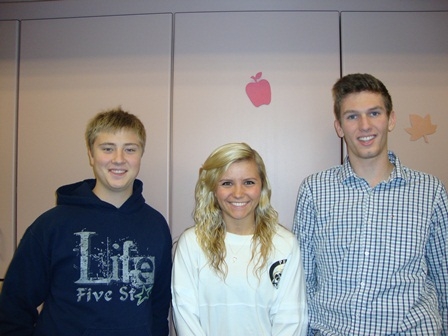
Management and Business students hard at work
 |
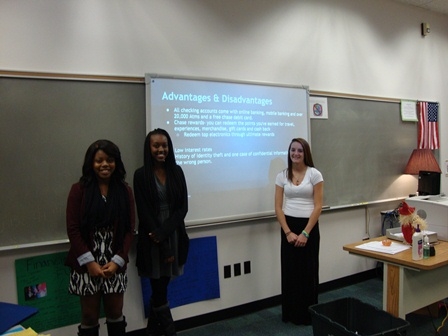 |
| Interns (Advanced Accounting) at Crowe Horwath Financial Services. | Bank presentations – ACP Finance Students. |
 |
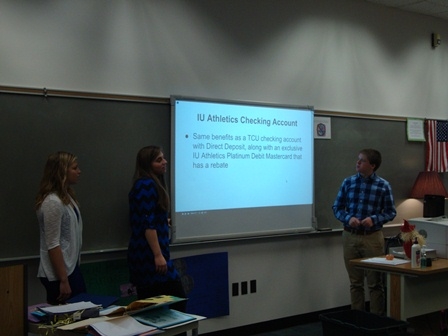 |
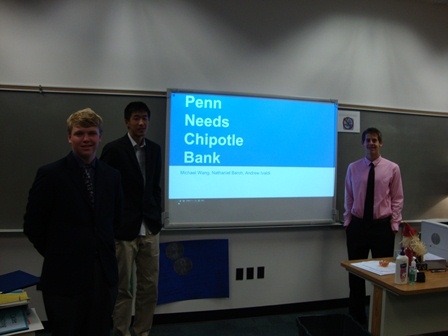
| Bank presentations – ACP Finance Students. | Bank presentations – ACP Finance Students. |
 |
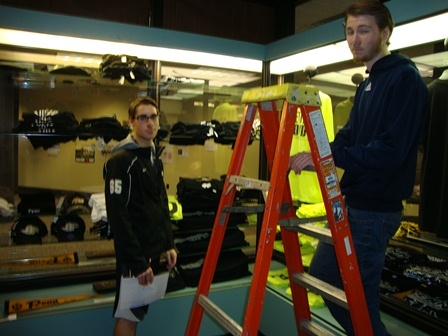 |
| Problem Based Learning Project with the Penn Booster Club. | Problem Based Learning Project with Penn Booster Club Merchandise Organization. |
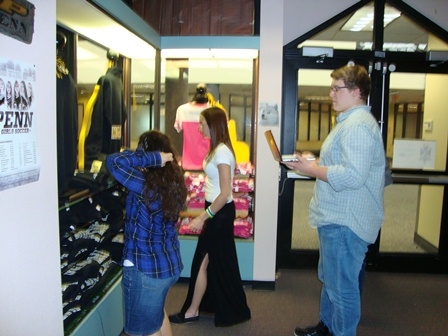 |
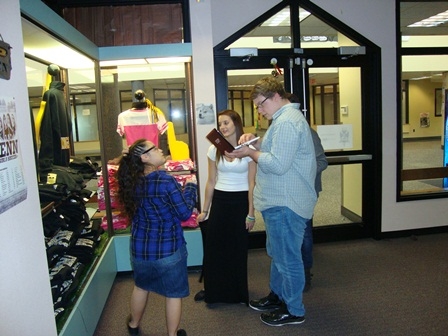 |
| Financial Services students taking inventory of the Penn Booster Club Merchandise. | Financial Services students finalizing inventory of the Penn Booster Club Merchandise. |
Health & Human Services Faculty
Health & Human Services Faculty
Click here for staff contact information
ENGLISH
- Jeremy Starkweather
- Danielle Duvall-Cundiff
- Lindsay Soard
- Deb Swerman
- Christina Burcham
- Stephanie Roy-Stover
- Warren Anderson
- Martin Ufkin
- Cassandra McNamara
- Candice Beelaert
- Julie Ohlson
- Mike Coffee
- Caelea Armstrong
- Julie Huxford
- Dawn Troyer
- Curt Rallo
- Kenny Prawat
SOCIAL STUDIES
- Kylie Hamm
- Pat Barrier
- Eric Bowers
- Keith O’Connell
- Cubby Irons
- John Vandygriff
- Bryon Whitten
- Jim Rhoads
- Todd Crist
- Lucas Stegemiller
- Bryan Hunter
- Kate Beruben
- Lori Pettine
- Dan Schaetzle
PHYSICAL EDUCATION
- Lisa Bottorff
- Matt Cates
- Barak Coolman
- Jen Crist
- Amy Hildebrandt
- Raoul Donati
- Brad Harper
- Jerimiah Haggart
- Dave Manspeaker
- Pete Riordan
- Kristi Ulrich
- John VanDriessche
- Chad Wetzel
- Laura Zerfas
FAMILY AND CONSUMER SCIENCE
- Amy Rice
- Rachael Meyers
- John Fitch
- Kylee Wetzel
- Becky Wachs
Courses offered in Health & Human Services Academy
Social Sciences
AP Human Geography
Civics/Citizenship
Current Issues
World History
U.S. History
U.S. History H/AP (Seminar)
AP U.S. History
ACP U.S. History
Topics in U.S. History
Psychology
AP Psychology
Sociology
Anthropology
U.S. Government
ACP Government
AP U.S. Government
AP Comparative Government
Economics
AP Economics
Senior Seminar in Social Justice
Law Enforcement
Introduction to GIS
Physical Education
P.E. I & II
Adapted P.E.
Physical Management
Lifeguarding
Aerobics
Crossfit
Physical Conditioning
Fitness I & II
Water Activities
Water Fitness
Advanced Team Sports
Nutrition & Fitness
Jogging & Running
FACS (Family & Consumer Science)
Interpersonal Relations
Nutrition & Wellness
Restaurant
Adult Roles
Advanced Child Development
Child Development
Human Development
Housing
Textiles
Textiles II
Preparing for College & Career
Health
Health
Advanced Health
Intro to Physical Therapy
STEM Careers
The STEM Academy can lead to a variety of careers in fields including science, technology, engineering, math and medicine and these are careers that will be in high demand in the future and will create a vibrant economy.
Community Partnerships
Community partnerships play an important role in the success of our students.
Whirlpool Corporation has partnered with nine teams of Penn STEM students in order to design storage components for schools. The challenge given us by Whirlpool was to create a storage product that students or teachers would use in schools. After a day at Whirlpool headquarters learning about innovation and design, the teams consulted with Whirlpool as part of the process of designing a storage unit. Each team presented its product design to Whirlpool officials at their corporate headquarters at the end of the semester.
What organizations are incorporated into STEM activities?
Advanced Technology Courses
0615 Computer Network Support
0623 Design Processes
0609 Automation/Robotics
0631 Construction Processes
0629 Construction Systems & Processes
0625 Manufacturing Systems
0627 Manufacturing Processes
0629 Construction Systems
0631 Construction Processes
0633 Vocational Building Trades